

Eczema
What Is Eczema?
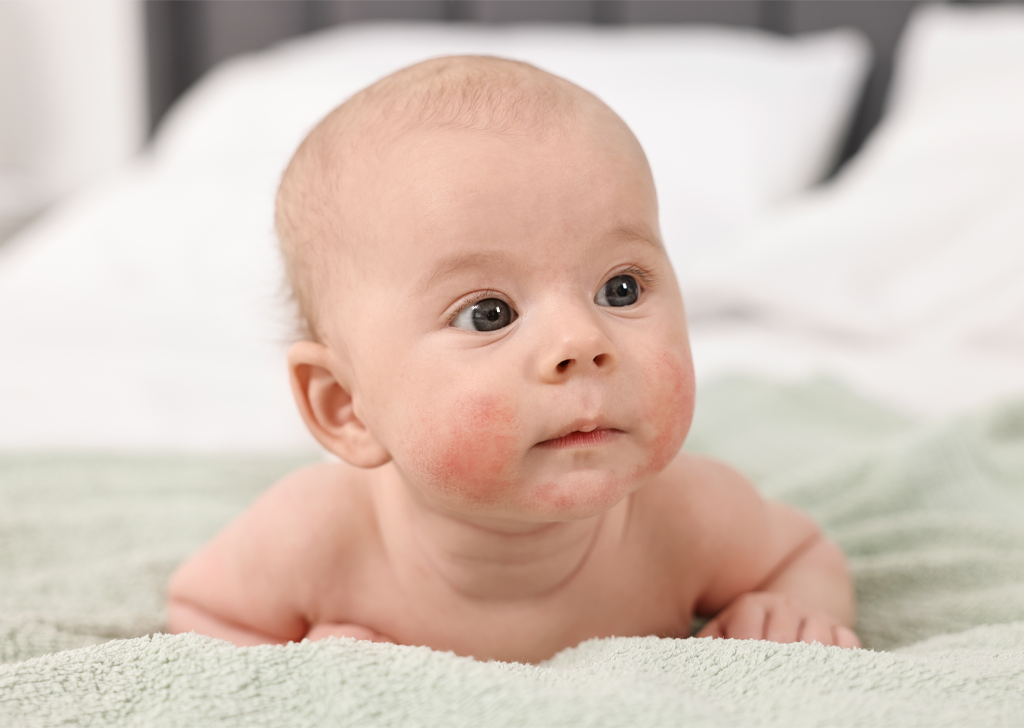
Commom & Chronic: Atopic dermatitis is the most common type of eczema. It causes dry, red, scaly, and intensely itchy patches of skin. There is a genetic component to atopic dermatitis. Other types of eczema include contact dermatitis, seborrheic dermatitis, and nummular eczema.
Not Contagious: You cannot catch eczema or spread it to other children or family members.
Barrier Dysfunction: Children with eczema often have a genetic mutation that weakens the skin's natural protective barrier making it more porous, letting moisture out and irritants/bacteria in.
Common Locations:
Infants: Cheeks, forehead, scalp, and around the mouth (often worsened by drooling).
Older children & teens: Bends of the elbows and knees, neck, wrists, ankles, hands, and feet.
Other Conditions: Children with eczema often also have asthma and allergies.
How is Eczema Treated?
Moisturizers: This is the mainstay of treatment. Moisturizers help keep the skin hydrated and prevent it from drying out.
Topical Corticosteroids: Steroids decrease the inflammation associated with eczema. Steroids do have side effects, however, and should not be used for extended periods of time and should not be applied to sensitive areas such as the face or genitals.
Non-Steroids: These newer treatments include calcineurin inhibitors and phosphodiesterase inhibitors and target specific pathways in the inflammatory response.
Bleach Baths: Bleach is a mild antiseptic and is used to help clean the skin in children with eczema.
Quick Links

All Pediatric Services
Learn More
Keep
In Touch

Office Hours
- Monday 9:00 am - 6:00pm
- Tuesday 9:00 am - 6:00pm
- Wednesday 9:00 am - 6:00pm
- Thursday 9:00 am - 6:00pm
- Friday 9:00 am - 6:00pm
- Saturday 8:00 am - 9:00 am
- Sunday Closed
Contact Info
Office Address: 1294 W 6th St #102
San Pedro, CA 90731
Call Or Text(310) 832-6487
Fax(310) 832-6913
© 2026 San Pedro Pediatric Medical Group. All rights Reserved. Accessibility Statement - Privacy Policy - Sitemap
Powered by:
