

Allergies
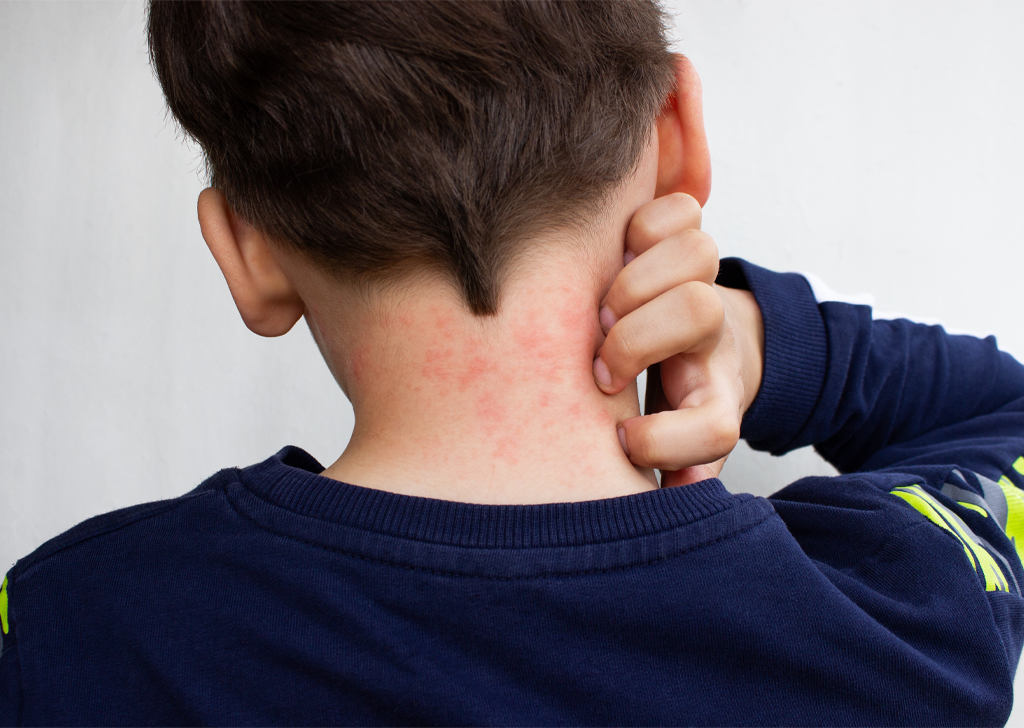
Common Types of Allergies in Children
Food Allergies: Triggered by immune reactions to specific proteins. The top 9 common food allergens are milk, eggs, peanuts, tree nuts, soy, wheat, fish, shellfish, and sesame.
Environmental Allergies (Allergic Rhinitis / Hay Fever): Triggered by airborne particles like pollen (trees, grass, weeds), dust mites, mold, and pet dander.
Eczema (Atopic Dermatitis): A chronic skin condition often linked early on with a higher risk of developing food allergies.
Allergy Symptoms:
Mild: Mild allergy symptoms include sneezing, coughing, itchy or watery eyes, or mild skin rash. These symptoms often are treated by avoiding unnecessary exposure to the allergen and go away on their own.
Moderate/Severe: More severe allergic symptoms include hives, facial or throat swelling, and difficulty breathing. Medications are often necessary to control symptoms. In severe cases, called anaphylaxis, injectable epinephrine is needed to control a reaction.
Treatment:
Early Introduction: There is evidence that early introduction of food and environmental allergens leads to a state of tolerance to that allergen.
Avoidance: Children with a known allergen should avoid contact with that allergen whenever possible.
Medications: Antihistamines and corticosteroids are the two types of medications used to treat most allergy symptoms. They can be given orally, nasally, or ophthalmically. Epinephrine is used to treat anaphylaxis. Children with severe allergies should carry an Epipen with them at all times.
Immunotherapy: Allergy shots work by inducing tolerance by incrementally increasing the dose of an allergen. Allergy shots are given by an allergist.
Quick Links

All Pediatric Services
Learn More
Keep
In Touch

Office Hours
- Monday 9:00 am - 6:00pm
- Tuesday 9:00 am - 6:00pm
- Wednesday 9:00 am - 6:00pm
- Thursday 9:00 am - 6:00pm
- Friday 9:00 am - 6:00pm
- Saturday 8:00 am - 9:00 am
- Sunday Closed
Contact Info
Office Address: 1294 W 6th St #102
San Pedro, CA 90731
Call Or Text(310) 832-6487
Fax(310) 832-6913
© 2026 San Pedro Pediatric Medical Group. All rights Reserved. Accessibility Statement - Privacy Policy - Sitemap
Powered by:
