

Asthma
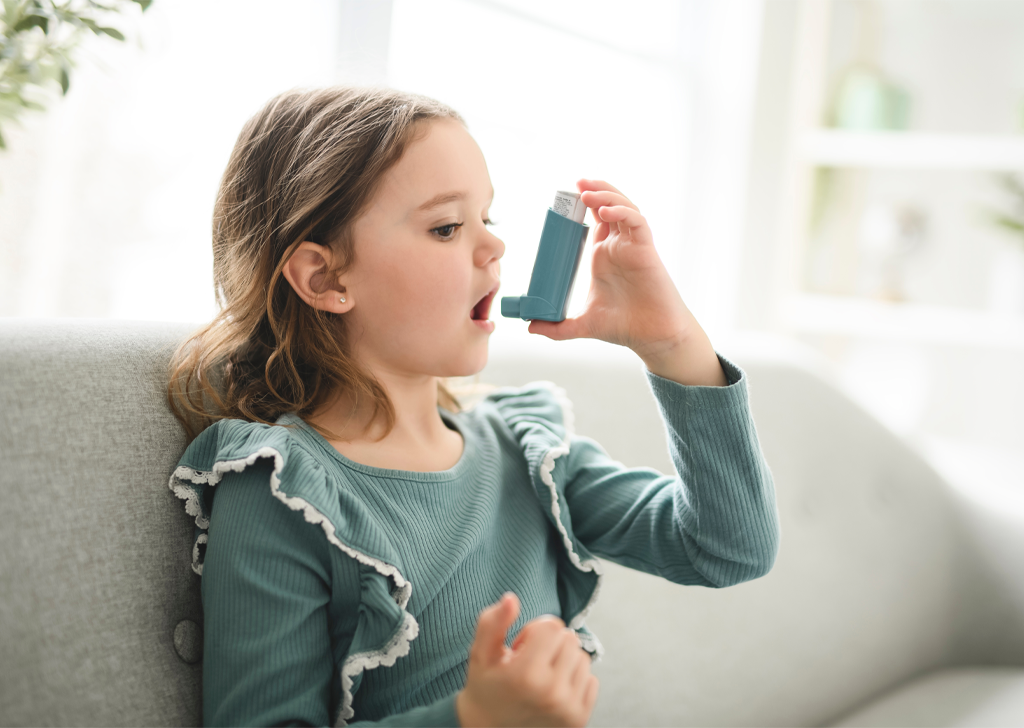
Asthma is a chronic obstructive lung condition where the airways become inflamed, swollen, and narrow, making it hard to breathe.
Common Symptoms
Coughing: Often persistent, or worse at night, early in the morning, or during/after exercise.
Wheezing: A whistling or squeaking sound when exhaling.
Shortness of Breath: Feeling winded, trouble catching breath, or difficulty speaking more than a few words at a time.
Chest Tightness or Pain: Feeling a squeeze or pressure in the chest.
Common Triggers
Respiratory Infections: Illnesses such as colds, flu, RSV, and COVID-19 can trigger an asthma attack. Having asthma can also prolong these illnesses.
Secondhand Smoke: Exposure to both cigarette smoke and smoke from a wildfire can cause chemicals to enter the lungs, causing an asthma attack.
Allergens: Dust mites, mold, pollen, and pet dander are a few of the allergens that can trigger asthma.
Cold Air and Changes in Weather
Types of Medications
- Inhalers
Short Acting Rescue Inhalers: These inhalers work quickly to open up the airways.
Long Acting Controller Inhalers: These inhalers don’t work as fast, but if used daily, can control the inflammation associated with asthma.
Combination Inhalers: A combination inhaler is one inhaler that contains both a short acting medication and a long acting medication.
Nebulized Medications: These medications come as liquids that are placed in a machine called a nebulizer. A nebulizer compresses air, turning the medication into a vapor that a child can breathe. A nebulizer is ideal for a small child who can not take deep breaths or has trouble coordinating their breath to the delivery of an inhaler.
Systemic Medications: These medications are either taken orally or by injection. They work by decreasing the immune response and controlling inflammation.
Quick Links

All Pediatric Services
Learn More
Keep
In Touch

Office Hours
- Monday 9:00 am - 6:00pm
- Tuesday 9:00 am - 6:00pm
- Wednesday 9:00 am - 6:00pm
- Thursday 9:00 am - 6:00pm
- Friday 9:00 am - 6:00pm
- Saturday 8:00 am - 9:00 am
- Sunday Closed
Contact Info
Office Address: 1294 W 6th St #102
San Pedro, CA 90731
Call Or Text(310) 832-6487
Fax(310) 832-6913
© 2026 San Pedro Pediatric Medical Group. All rights Reserved. Accessibility Statement - Privacy Policy - Sitemap
Powered by:
